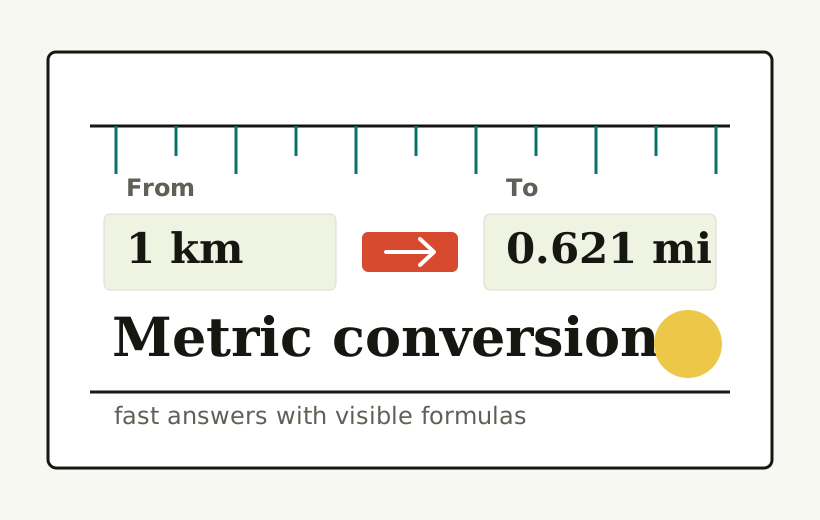
Convert length, weight, temperature, volume, area, and speed without waiting through popups or a slow page. Pick a unit, enter a number, and get the result with the formula.
Most metric conversion formulas use one base unit. Length conversions pass through meters, mass conversions pass through kilograms, and volume conversions pass through liters. Temperature is different because Fahrenheit and Celsius use different zero points.
For example, 5 kilometers to miles is calculated as 5 x 1000 meters, then divided by 1609.344 meters per mile. The answer is 3.10686 miles.
Practical guide
How to choose the right conversion
Use exact definitions for engineering and shipping
Length and weight conversions on this site use exact reference factors where standards define them. A mile is exactly 1,609.344 meters, an inch is exactly 2.54 centimeters, and a pound is exactly 0.45359237 kilograms. That matters when you are estimating materials, package weights, freight dimensions, or product specifications.
Round for everyday decisions
For quick everyday use, a rounded answer is usually easier to read. One kilometer is about 0.62 miles, one kilogram is about 2.2 pounds, and one liter is about 0.26 US gallons. The calculator keeps more precision in the result, while the examples show the rounded numbers most people actually use.
Temperature uses an offset, not just multiplication
Fahrenheit and Celsius do not share the same zero point, so temperature conversion needs both multiplication and addition or subtraction. Fahrenheit to Celsius subtracts 32 before multiplying by 5/9. Celsius to Fahrenheit multiplies by 9/5 and then adds 32.
Accuracy notes
When precision matters
Most consumer conversions only need two to four decimal places. Construction, recipes, travel, shipping, and fitness estimates rarely benefit from showing every possible digit. Scientific work, manufacturing tolerances, and compliance documents may require the exact factor and a clearly stated rounding rule.
This tool shows the formula so you can see whether the answer came from multiplication, division, or a temperature offset. If you copy a value into a quote, recipe, label, or listing, keep the unit with the number so the meaning is not lost.
Common rounding choices
Use case
Good rounding
Driving or running distance
1 or 2 decimal places
Body weight or luggage
1 decimal place
Recipes and liquid volume
2 decimal places or common fractions
Product dimensions
Match the precision of the original measurement
Plain answers
Metric conversion FAQ
What is the easiest way to do metric conversion?
Use a converter that starts from a trusted base unit and shows the formula. That keeps the answer fast while making the math easy to check.
Why do converted numbers sometimes look rounded?
Some conversions create long decimal values. This calculator rounds the displayed result to useful significant digits, while the formulas keep the exact conversion factors.
Can I convert imperial units too?
Yes. The calculator supports common imperial units including inches, feet, miles, ounces, pounds, gallons, and miles per hour.
Does this page send my measurements anywhere?
No. The conversion runs entirely in your browser and the numbers you type are never uploaded. The site does use Google Analytics and advertising, which collect standard usage data described in the privacy policy.
The 1975 law that made conversion voluntary, what staying half-metric costs, and where America is already metric.
Trust basics
Privacy note
This converter runs in your browser and does not require an account. The measurement values you enter are never uploaded. The site uses Google Analytics and Google AdSense — the privacy policy explains what they collect and how to opt out of personalized ads.